
Review of Craig v. Malpass, Part 1
On March 24th of this year, Cameron Bertuzzi’s channel on YouTube, Capturing Christianity, streamed a discussion between William Lane Craig and Alex Malpass. Nominally, the topic of debate was “Did the universe begin to exist?” However, their actual discussion was quite a bit more focused onto two very particular subjects. In part one of this review, we’ll look at the discussion of whether actual infinites are metaphysically possible. In the forthcoming part two, we’ll discuss the manner in which actual infinites are constructed.
As I am keenly interested in these particular questions, I was very excited for this discussion. I’ve discussed my contention with Dr. Craig’s treatment of the mathematics of infinity on a few occasions (most directly, here and here) but this particular debate brings forth some issues with which I have not previously engaged.
Dr. Craig opens the discussion by offering the position that actual infinites are metaphysically impossible. His argument, as he lays it out, is as follows:
- An actually infinite number of things cannot exist.
- A beginningless series of events in time is an actual infinite.
- Therefore, a beginningless series of events in time cannot exist.
Dr. Craig then offers that the crucial premise in this argument is the first and he goes on to attempt to defend that proposition. However, it is worth noting that the second premise is also contentious– indeed, Dr. Malpass will note that Aristotle, for example, agreed with (1) but denied (2). In fact, there are a significant number of modern philosophers of mathematics who would vehemently deny premise (2); and there are other reasons why one might be inclined to reject (2), as well. Indeed we will revisit this later, as I think that the argument is not at all as consistent with Dr. Craig’s position as he would like to believe.
In the meantime, however, let’s continue to review the first premise. The first and most well discussed reason which Dr. Craig offers in support of this position is the example of Hilbert’s Hotel, which (as he himself notes) is a favorite point of discussion for him. Indeed, it is rare for Dr. Craig to talk about infinities without bringing up Hilbert’s Hotel.
Dr. Craig maintains that Hilbert’s Hotel illustrates that actual infinites are absurd. The question, however, is what he means by this assertion. In philosophy, there is a technical meaning for the term “absurd.” This technical use of the word is meant to be equivalent to saying, “This set of propositions implies a contradiction.” That is to say, an “absurdity” is the recognition of an inconsistency in a logical argument. A rather classic example would be the phrase “John is a married bachelor,” which is absurd because the word “bachelor” implies “not married,” contradicting the statement that John is married. If a proposition is inconsistent then that gives us more than enough reason to reject it; after all, ex falso quodlibet.
However, that is not how Dr. Craig is using the word, “absurd,” in this case. Rather, Dr. Craig is using the term colloquially as a synonym for “strange.” Seeing this precise issue, Dr. Malpass notes that it may well be strange but it is certainly not inconsistent– a position with which Dr. Craig explicitly agrees– and one is left to wonder how strangeness is supposed to imply metaphysical impossibility. At no point does Dr. Craig actually address this. In fact, he admits that his argument would be entirely unconvincing to anyone unperturbed by this strangeness. So, it would seem that Dr. Craig’s argument is:
- Hilbert’s Hotel exhibits strange behavior.
- If Hilbert’s Hotel exhibits strange behavior then all actual infinites exhibit strange behavior.
- Therefore, actual infinites are metaphysically impossible.
This is clearly not even a valid argument, let alone a sound one.
As I noted, when replying to Dr. Malpass on this issue, Dr. Craig acknowledges that there are no inconsistencies in the treatment of actual infinites. Still, Dr. Craig remains convinced that despite being perfectly logically consistent it is somehow demonstrable that these actual infinites cannot be instantiated in reality. He then claims, “José Benardete, in his book on infinities, says that there’s no logical contradiction involved in these monstrosities but you have only to look at them in their concrete reality to see that this is metaphysically impossible.”
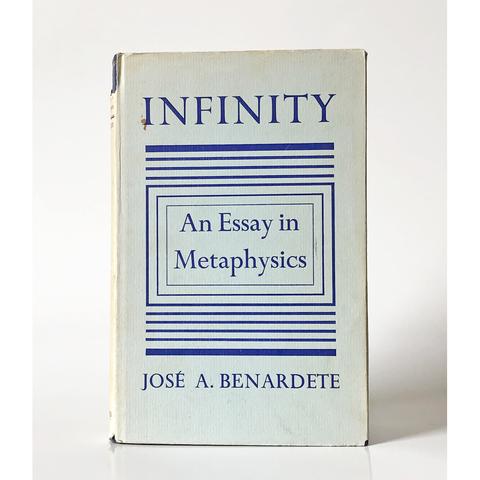
EDITOR’S NOTE (04 SEP 2024): In the following paragraph, and continuing through this article, I accuse Dr. Craig of dishonestly misrepresenting Jose Benardete. I was wrong to do so. In my initial writing, I had missed that Benardete actually does make a statement in Infinity which Dr. Craig is paraphrasing reasonably accurately. On page 238 of the book, Benardete states, “Viewed in abstracto, there is no logical contradiction involved in any of these enormities; but we have only to confront them in concreto for their outrageous absurdity to strike us full in the face.” I have left my original text in place so as to not obfuscate or hide my error. I would like to apologize to Dr. Craig for my mistake and for the vitriol with which I pursued it. Additionally, I would like to thank commenter Tyler Scollo for making me aware of the error.
As someone who has actually read José Benardete’s Infinity: An Essay in Metaphysics, I would like Dr. Craig to point out exactly where it is that he supposes Benardete makes such a statement. I have not been able to find it and, indeed, that statement stands in direct contraposition to Benardete’s very explicit purpose in writing the book. The abstract on the inside cover of the book begins with the phrase, “This book is an attack on finitism in all its forms, philosophical and mathematical.” Throughout the whole of the book, Benardete defends the philosophy of actual infinites against both mathematical finitists, such as Kronecker and Brouwer, as well as metaphysical finitists, such as Kant and Hilbert. In his epilogue, he acknowledges that his work is a “metaphysical adventure” which “very much smacks of the quixotic,” but at absolutely no point does he ever concede that actual infinites are metaphysically impossible.
Dr. Craig’s claim, here, is a flat-out lie. I normally avoid accusing a person of intentional deception when reviewing these sorts of discussions. In general, I find it more charitable to think that the position which he’s referencing is misunderstood or that a purported implication is simply mistaken. However, Dr. Craig does not leave me such an option, in this case. He completely mischaracterizes Benardete’s work in an attempt to claim that it says precisely the opposite of what it actually, clearly, and explicitly states to be its entire purpose. Either he has not actually read Benardete and is trying to pretend that he has; or else he has read Benardete and is deliberately misrepresenting him. This is not a simple mistake. This is an overt lie.
Dr. Craig continues by referring to a particular paradox in Benardete’s work which imagines a book with an infinite number of pages from that work. Now, the reference to the infinite book is actually a discussion which Benardete does have in Infinity (pp 236-237); and Dr. Craig does lay out Benardete’s position fairly accurately, if one discounts his attempts to poison the discussion through his earlier lie. Benardete does, indeed, say that opening the back cover of the book, one would see nothing. And while he doesn’t explicitly state that attempting to touch the pages would cause one’s hand to be inexplicably stopped, he makes that claim for an exactly analogous paradox involving infinitely piled slabs of rock, so the inference that it would also be the case for the infinite pages is reasonable.
Incidentally, I disagree with Benardete as regards what one would see when opening the infinite book from the back cover. Certainly, one would not see the last page of the book, since there is no last page of the book to be seen. That does not, however, imply that one would see nothing. The problem with metaphysical thought experiments of this sort is that they run afoul of our physical understanding of the world.
One needn’t even posit an infinite book in order to have a problem. What if the book only had 110 pages? Well, in that case, the last page of the book would only be 
Now, one might object that, of course, in the actual physical world such things are impossible; however, we are talking about a metaphysical thought experiment, so such physical limitations ought to simply be ignored. However, the curiosities and absurdities which these thought experiments are supposed to be illustrating are physical ones. What would we see? What would we touch? It seems silly to say, “Yes, this is physically impossible but it should be metaphysically possible!”
The infinite book, as well as each other paradoxical thought experiment which Benardete discusses, is absolutely no different than the idea of the Grand Hotel. Surely, the situation under discussion in each scenario is strange. This does not imply that actual infinites are therefore metaphysically impossible.
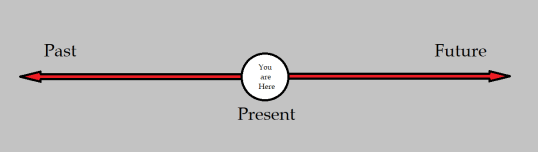
After this, Dr. Malpass introduces an objection to Craig’s position which he has co-developed with Wes Morriston. Now, Dr. Malpass completely acknowledges that this is not so much a direct objection to Craig’s arguments against the infinitude of the past as it is a claim that Craig’s philosophical view of the future is inconsistent with his view of the past.
According to Malpass and Morriston’s objection, the past and future bear a symmetry in respect to enumeration. On Malpass-Morriston, if it is impossible for the past to be infinite then it is similarly impossible for the future to be infinite. While Dr. Craig completely rejects the notion of the infinitude of the past, he holds to a notion of the infinitude of the future. So, if Malpass and Morriston are correct, then Dr. Craig must be incorrect either about the infinitude of the past or about the infinitude of the future.
In responding to Dr. Malpass’s acknowledgment that this is not a rebuttal of Craig’s argument against the infinitude of the past, Dr. Craig asserts that the Malpass-Morriston objection only applies to certain classes of people, such as “those who believe in personal immortality, or those who believe in angels, or… those who believe in God.” At this point, Dr. Malpass corrects Dr. Craig, noting that the objection applies to anyone who thinks that it is possible that the future is infinite. Immortality, angels, and God are red-herrings, and the objection applies with equal force to theist and atheist, alike.
Dr. Craig reacts to this correction by then claiming that the objection is just question-begging, in that case. He says that, “it just assumes that an endless future is possible even though you have an allegedly flawless argument that it’s not.” Of course, Malpass-Morriston does no such thing. It does not say that an endless future is certainly possible. Nor does it say that an endless future is certainly impossible. Rather, it claims that if an endless past is impossible, then it is also the case that an endless future is impossible.
After this, Dr. Craig says that if Malpass-Morriston is assumed, then it commits a person to hold that “there is no possible world in which the series of events has a beginning but no end.” Again, this is absolutely not the case. Rather, Malpass-Morriston claims that if there is no possible world in which the series of events has no beginning, then there is also no possible world in which the series of events has no end. Put another way, on Malpass-Morriston, if there is some possible world in which the series of events has a beginning but no end (as Dr. Craig claims is the case), then there must be a possible world in which the series of events has no beginning.
Unfortunately, Dr. Malpass seems to miss this distinction, himself, during the discussion (and in fact, he seems to somewhat back-up Dr. Craig’s misconception in the heat of the moment), so I have no idea how Dr. Craig might respond to this correction.
Moving on from this, Dr. Craig attempts to say that on his notion of a Tensed Theory of Time there is an asymmetry inherent in time itself which breaks the Malpass-Morriston objection. Interestingly, the moderator of the conversation steps in at this point with a rather poignant objection. Cameron Bertuzzi notes that Dr. Craig is a Presentist, and as such he believes that only the present moment exists while neither past nor future moments exist. Bertuzzi asks, “Well, if the past is not real, how can you say there is an infinite number of past events?”
Dr. Craig’s response is completely inadequate.
He says, “Um, because we can count them.” Well, what does that mean? What does it mean to count things which do not exist? If it is the case that we can count non-existent past events, it would seem that we can count non-existent future events just as well. If both are equally non-existent, then the fact that we can count them certainly doesn’t stand as a symmetry breaker for Malpass-Morriston.
Dr. Craig continues that past events “have been instantiated in reality.” While this is certainly an asymmetry between past and future on Craig’s Tensed Theory of Time, it is not clear how this is meant to be an asymmetry between our ability to enumerate the events of the past and our ability to enumerate the events of the future. He clarifies that, “I’ve made it clear that when I say that an actual infinite cannot exist I mean that it cannot be instantiated in the real world.” However, even if the past is beginningless and even if past events have been instantiated, it does not follow that an actual infinite has been instantiated. None of those past events exist, on Craig’s view. There is no extant set of past moments which is infinite even if every past event has been instantiated and was preceded by some other past event.
This returns us to to Dr. Craig’s initial argument. As you’ll recall, his syllogism was as follows:
- An actually infinite number of things cannot exist.
- A beginningless series of events in time is an actual infinite.
- Therefore, a beginningless series of events in time cannot exist.
However, it seems that on Dr. Craig’s own view of time, it cannot be said that a beginningless series of events in time is an actual infinite. So even if (1) holds and even if one adopts Dr. Craig’s theory of time (which I have discussed at length, 1, 2, 3, 4, 5, 6), then (2) is not true, and the whole syllogism fails. Of course, on Dr. Craig’s view, a beginningless series of events still does not exist– but then neither does a series of events which actually has a beginning!
Perhaps Dr. Craig might insist that a series of events need not necessarily exist in order to be enumerated; however, that leads us right back to the Malpass-Morriston symmetry and implies that future events need not exist in order to be enumerated. When Dr. Craig asserts that past events have been instantiated, Dr. Malpass notes that future events will be instantiated; so that does not appear to be a symmetry breaker, either.
It is at this point that Cameron Bertuzzi breaks in, once again, to let both participants know that he will need to cut that particular discussion short in order to move on to the second half of the debate.
In summary, Dr. Craig asserts that actual infinites are metaphysically impossible; but the only two pieces of support which he offers for this claim are the fact that actual infinites are strange and the bald-faced lie that José Benardete said they are metaphysically impossible. He asserts that a beginningless series of events is an actual infinite despite the fact that this is inconsistent with his own view of the nature of Time. He claims that future events cannot be totally enumerated because they do not exist while simultaneously claiming that past events can be totally enumerated despite the fact that they do not exist. All in all, Dr. Craig does a very poor job of defending his position.


 Boxing Pythagoras
Excellent post! Really helpful.
Let’s go over your bad-faith screed, shall we?
I’m quite humbled that you found this old piece of mine to be worthy of such a lengthy reply! I will do my best to address all of the points you’ve raised, but there is quite a lot in here so please forgive me if I miss anything.
I’m afraid you might have misunderstood. I was referring to philosophers who agree with Dr. Craig’s first premise that actual infinites cannot exist and yet disagree with his second premise that a beginningless series of events in time is an actual infinite. These philosophers tend to reject ZF set theory.
Sure! It’s Aristotle’s Physics IV.10-14. In particular, Aristotle believes that time is a means by which change is measured and not itself an extant, divisible entity. As such, Aristotle holds that time need not constitute an actual infinite despite the fact that it describes a continuous chain of motion without beginning.
How does this function as evidence? Why should something being counter-intuitive bear any evidentiary weight? Dr. Craig’s position is that actual infinites cannot exist. He doesn’t simply say that it would be counter-intuitive for actual infinites to exist. He doesn’t even say that it is probable that actual infinites do not exist. He says that they cannot exist. Human intuition has proven quite poor at determining what is possible in physics, so for Dr. Craig’s argument to be convincing he’ll need to offer something more than just, “infinities are strange.”
I haven’t read Dr. Craig’s first book, but I have read some of his more recent works which discuss infinites. I have never seen him make any stronger link between these thought experiments and his belief that actual infinites cannot exist than that they produce strange results. Are you saying that he offered something better in his first book which he then excluded from his later work?
There is certainly no pause in Dr. Craig’s actual speech which would seem to indicate such a grammatical shift. He gives absolutely no indication that Benardete draws completely opposite conclusions from the thought experiments illustrated in his work than Dr. Craig does, either here or in any of his other work with which I am familiar. This would be like someone quoting Dr. Craig discussing the strangeness and counter-intuitive nature of the Trinity in order to conclude that it is therefore metaphysically impossible.
My opposition to this argument was that we are asking about the physical repercussions of a physically impossible situation. Yes, it is perfectly reasonable to construct a thought experiment discussing a book with infinite pages, each half the width of the last. However, if we are already willing to grant a physically impossible situation, we should not be surprised that it would lead to physically impossible results.
Dr. Craig most certainly does believe that the future is a potential infinite. He absolutely does not hold to the idea that there will be a final future event after which no other events occur.
They are not assuming this. They are arguing for it. The entire paper is an argument that future events are entirely symmetrical with past events, and that if one argues that the past cannot extend infinitely then that same conclusion must therefore apply to the future.
I think you are missing the point that M&M is trying to make. Why do you think that past events in a beginningless series constitute an actual infinite? Is it because they can be enumerated? If so, future events can be enumerated in exactly the same way, so that would seem to imply that future events in an endless series would also constitute an actual infinite. Do you think that past events exist despite not being part of the present? If so, then why would you believe future events can’t exist despite not being part of the present? The point of M&M is that there is symmetry between past and future regardless of whether one is an A-Theorist or a B-Theorist.
Because this is precisely the symmetry which Dr. Craig is attempting to break. He says that beginningless past events would constitute an actual infinite because they can be enumerated. Endless future events can also be enumerated, so in order for endless future events to NOT constitute an actual infinite there must be some other necessary condition for comprising an actual infinite which is inherent in past events but which is not inherent in future events.
You are saying that a beginningless series of past events which is not currently actual still comprises an actual infinite because it can be enumerated. An endless series of future events which is not currently actual can also be enumerated. So either that means that this endless series of future events is an actual infinite or else that there is some other necessary condition for being an actual infinite than simply being able to enumerate the series.
Yea, you missed a lot, so I’ll have to try to trim down as much as possible.
They needn’t be in the room. I said that one of Dr. Craig’s premises is more contentious than he lets on. Obviously anyone who accepts actual infinites as being metaphysically possible would find it contentious, but even among philosophers who hold that they are metaphysically impossible Dr. Craig’s second premise remains under debate.
I absolutely agree that it is fine to conceptualize such a series in terms of the number of changes. Aristotle would simply have disagreed that this constitutes an actual infinite. Dr. Craig argues that it is. Malpass and Morriston argue that IF this constitutes an actual infinite, then so does an enumeration of future events.
Thought experiments are absolutely wonderful tools for pumping intuition. They are not, however, strong enough evidence in and of themselves to warrant belief in a proposition. Thought experiments lead us to ideas. Those ideas must then be demonstrated in order to warrant belief. The thought experiment, alone, carries rather little evidentiary weight.
And I’m saying that if Dr. Craig wants to demonstrate that actual infinites are metaphysically impossible he needs a stronger argument than a thought experiment.
My objection is not toward intuition-driven research programs. My objection is toward pretending that a thought experiment is enough evidence in and of itself to warrant belief in a proposition.
I have not read The Kalam Cosmological Argument. Are you saying that the argument which Dr. Craig presents in that work is more full, sophisticated, and complete than he presents it in his subsequent published work? I have read The Tensed Theory of Time: A Critical Examination, God, Time and Eternity, and Time and the Metaphysics of Relativity, for example. Does Dr. Craig do a better job of explaining his argument in the first work he ever published on the subject than he does in his later publications?
Necessary? No. However, if one is attempting to communicate two completely separate grammatical phrases then a pause is one clear method for accomplishing this.
I think you missed my point. If one constructs a thought experiment which relies on a world where physics are very different, we should not be surprised that this would lead to curiosities which are difficult to understand. I think it is a mistake to draw any conclusions about metaphysics from such a thought experiment, alone, without more formal philosophical justification.
When I stated, in the original article, that Dr. Craig believes in the infinitude of the future, I was simply affirming the fact that Dr. Craig believes the future to be potentially infinite. I completely agree that Dr. Craig denies that this constitutes an actual infinite.
This is where Aristotle would disagree with you and also why I do not see how Dr. Craig has successfully constructed a symmetry breaker. No member of the series of past events is any more actual than is any member of the series of future events, on Craig’s Presentist view. So either one is left affirming that the series of past events IS actualized in the now or else there must be some other symmetry breaker in order for M&M’s conclusion to prove false.
It is not conceptually impossible, at all. Aristotle formulated a beginningless past as a potential infinite two millennia ago. Dr. Craig is trying to claim that despite the fact that no past moment is actual, on his Presentist view, the fact that one can enumerate past moments in a complete set implies that these past moments constitute an actual infinite. In exactly the same way, no future moment is actual, but future moments can be enumerated in a complete set.
Well, let’s go one point at a time to slam dunk this really quick.
You say smugly: “As someone who has actually read José Benardete’s Infinity: An Essay in Metaphysics, I would like Dr. Craig to point out exactly where it is that he supposes Benardete makes such a statement. I have not been able to find it.” Can’t find it, huh? It’s just absolutely befuddling where this could possibly be found!!
Pg. 238 of Benardete’s book (I found something that you were you just so unable to find; it was sooooo hard, omg):
“Viewed in abstracto, there is no logical contradiction involved in any of these enormities; but we have only to confront them in concreto for their outrageous absurdity to strike us full in the face.”
WOOOOOPPPSSS!!! hahahahaha. Are you going to apologize? I mean, AT LEAST QUOTE THAT! And go from there if you disagree with the context or something. But you don’t do any of that. You’re just lazy or you have Craig Derangement Syndrome. And don’t worry have MORE context to back up Craig choice of quotation.
You, Malpass, and the rest of the anti-Craig crusaders are such a joke. You’re so lucky no one has time to call you hacks out. Are you just banking on the fact that the book is hard to get, that its obscurity will cover for you? I mean, this is really irritating, honestly.
Indeed, I did miss this when I was first replying to Dr. Craig’s statement. I was absolutely wrong. Dr. Craig has paraphrased Benardete accurately.
I absolutely would like to retract my statement and offer an apology to Dr. Craig for my accusation.
I will add an Editor’s Note stating as much into the original article. I will leave my original text, as well, as I have no intention of hiding or obfuscating my errors.
That said, I would still argue that Dr. Craig is misusing Benardete, here. Again, the entire point of Benardete’s Infinity is to defend the metaphysical possibility of actual infinites. After all, almost immediately following the statement which Dr. Craig has paraphrased, Benardete proclaims, “Here I would counsel prudence lest we yield to panic and precipitately throw over all that we have accomplished… it does not necessarily follow that we must beat a hasty retreat back to finitism.” He then continues by arguing that discrete notions of space and time produce every bit as much absurdity as do continuous notions of space and time. Again, the entire point of his book is to defend the metaphysical possibility of actual infinites, in complete contraposition to Dr. Craig’s view.
Alright, thanks; I retract the invective.
2. This whole dialectic harkens back to what you baseless disqualify as legitimate methodology when doing modal metaphysics. Craig isn’t arguing from the reality of the monstrosities and saying that this NECESSARILY IMPLIES their metaphysical impossibility. He’s saying that the paradoxes and the absurdities give those who believe that the thought experiments illustrate the paradoxes/absurdities in a way that it gives them justification/reason for thinking that the obtainment of such states of affairs are metaphysical impossibility. Again, the structure of this type of reasoning is ubiquitous in the literature. Does Mary’s Room IMPLY that she gains novel phenomenal properties when she gains her cite? No, it’s an intuition pump. Does Mackie’s Queerness argument IMPLY that non-natural moral properties CAN’T exist? No, it’s an intuition pump. Whether any of this convinces YOU isn’t sufficient to plaster the argument with vegetables while in the stocks. The structure of the argument is in good company in the history of philosophy. Even Oppy admits that the absurdities can be defanged by embracing the purported ‘reductio’ (informal version) as what he’d expect. Fine. The same can be said for any of these kinds of arguments with this structure. If I’m a moral non-naturalist, will Mackie’s Queerness argument move me? Um, no. Does that mean Mackie’s argument is useless?! No. It’s a staple argument in the history of 20th century metaethics. The sociological explanation is that Christian philosophy of religion turns people into irrational appraisers of the success of philosophical arguments. They raise the bar so high that it’s absurd.
Honestly, it was completely understandable in this case. I was relying on my memory of Infinity when I wrote the original post and did not have a copy in front of me (as you mentioned, the book is quite difficult to acquire and my original reading had been in a university library). My comments toward Dr. Craig in this regard were wrong and my tone was accusatory.
I am quite grateful to be corrected when I am wrong. My entire purpose in writing publicly on Boxing Pythagoras is to put my views to the test in order to eliminate incorrect ideas. So, in all sincerity, thank you.
You are absolutely correct, here, and I am in agreement. There is nothing dishonest about Dr. Craig citing Benardete’s work in order to draw contrary conclusions. When I said that I think Dr. Craig is still “misusing” Benardete, it was not to imply that he was doing so to deceive anyone. I just don’t think that the citations actually further Dr. Craig’s point when one looks at them in their original context.
The claim which Dr. Craig is explicitly defending, in the debate, is that actual infinites are metaphysically impossible. He is not simply saying that some people may be justified in thinking that such states of affairs are metaphysically impossible. He is stating that actual infinites ARE metaphysically impossible. Presumably, in order to convince people who think that they are metaphysically possible– or at the very least, to convince people who think that they might be metaphysically possible– that this cannot be the case.
Thought experiments are fantastic tools for pumping intuition. They help to illustrate where there may be gaps in our understanding or where an idea might yield unforeseen repercussions. However, they are not in and of themselves convincing. This is why no philosopher who proposes a thought experiment simply stops there. They continue to analyze and expound upon the ideas more formally in an attempt to more thoroughly support their position. This is why I say that if Dr. Craig is attempting to convince people who either disagree with him or who are on the fence, a thought experiment is not enough in and of itself. It is going to take a more powerful demonstration to change someone’s mind on the subject.
You’re failing to understand the function of the thought experiments in the overall dialectic. Craig’s OVERALL argument is aporetic. This structure is made explicit in the Kalam book of 1979. Before judging its effectiveness, just understand the structure. First, Craig admits that ZF set theory justifies keeping Hume’s Maxim, restricting Euclid’s Maxim to finite collections, and admitting the ‘mathematical legitimacy’ of infinite sets. Second, Craig argues that the role this dialectic played in admitting Infinity into mathematics doesn’t seamlessly transition into metaphysics. From that mathematical aporia, one can’t appeal to the moves made ‘there’ and justify the same moves in admitting the Infinite into reality. Third, Craig recommends we keep Hume’s Maxim, make Euclid’s Maxim unrestrictedly apply to collections of things in Reality, and prohibit Infinity from Reality. This move makes Reality infinitely more simple, compositionally speaking. The so-called absurdities and paradoxes are manifold (as evidenced by the plurality of the thought experiments). And this notwithstanding having a mathematical way to describe these ‘metaphysical’ paradoxes/absurdities. The bullets you need to bite, therefore, are manifold. Using Lewis’s cost/benefit analysis, there doesn’t seem to be any cost (other than falling victim to premises in Natural Theological arguments, which is desperation, I think), you get a non-paradoxical, metaphysically coherent Reality AND you get the Infinite in mathematics, a perfectly sensible Reality, complimented by the Razor and consistent with aporetic methodology as propounded by folks like Rescher.
Your objections to intuition-pumps stems from metaphilosophical differences. Natural Theology (at least, this aspect) comes from a particular metaphilosophical way of conceptualizing the methods and subject-matter of the philosophical enterprise. Thus:
Bealer thinks Intuitions serve as intellectual seemings or appearances, which, barring defeaters, provide prima facie justification for modal beliefs.
Williamson thinks that Philosophical knowledge, including knowledge of modal truths, often begins with the intuitive, prior to any formal argumentation or empirical investigation.
Plantinga thinks our intuitions about possible worlds play an indispensable role in providing us with at least initial, defeasible evidence about what could not have been otherwise.
Kripke says a posteriori necessities depend on empirical findings, but our intuition that the proposition could not have been otherwise is what guides the modal reasoning.
Chalmers says Intuitions about what is conceivable provide significant evidence about what is possible, guiding our understanding of the space of possible worlds.
Stalnaker says Intuitive judgments are often treated as evidence for philosophical claims, especially in the realm of modal epistemology.
Jackson says we have intuitive knowledge of possibilities and necessities, which forms the basis of our philosophical and ordinary modal reasoning.
Fine says our intuitions about what could have been different are critical in understanding the nature of reality; they are not merely psychological but have a substantive epistemic role.
And, like I said, the thought experiments our intuitions inform us about are ‘manifold’. For those whose modal intuitions find these instances absurd, they’d be justified in believing that the proposition that an actual infinite can be metaphysically instantiated to be metaphysically impossible. And if I think I’m justified in affirming the proposition that there’s a tree in my backyard, that’s tantamount to saying there IS a tree in the backyard.
Okay, that’s the structure. What say you?
I completely understand that Dr. Craig is attempting to put forward an aporetic argument. I am simply saying that such an argument remains thoroughly unconvincing to anyone with a contrapositive view without more powerful formal argumentation than simple thought experiments; and that simple thought experiments may or may not be convincing to someone who remains on-the-fence about the subject.
It is not actually the case that there is no cost. Once again, as Benardete argues in Infinity immediately after the statement Dr. Craig likes to paraphrase, finitism offers just as much paradox and contradiction as infinitism does, in metaphysics.
For a simple example, if metaphysical finitism is true, then one of three things follows: (a) squares cannot exist in reality, (b) squares can exist but one cannot traverse their diagonal exactly, or (c) the diagonal of a square is commensurate with its sides. Any of these three options bears a significant metaphysical cost which would require just as complete a reformation of our view of Reality as does metaphysical infinitism.
I don’t think most of the philosophers which you have summarized here are contradicting what I have said.
Bealer thinks intuitions are prima facie evidence. Williamson thinks knowledge begins with the intuitive, which is then followed by formal argumentation. Plantinga thinks intuition provides us initial evidence. Kripke says that intuition guides the modal reasoning. Chalmers says that intuition provides evidence about what is possible. Jackson says that intuitive knowledge of possibilities forms the basis of moral reasoning.
In all of these cases, intuition is a starting point which points us in a direction for stronger investigation. Intuition is not the endpoint for any of these philosophers. That is exactly what I am saying, here. There is nothing wrong with pointing to a thought experiment and saying, “This seems strange and we should therefore investigate further.” What is problematic is saying, “This seems strange therefore the foundational underlying axiom of all modern mathematics must be metaphysically impossible despite the inordinate empirical evidence that these mathematics seem to describe reality with extreme accuracy and precision.”
This is why I continue to assert that thought experiments alone are not enough to justify Dr. Craig’s claim that “Actual infinities are metaphysically impossible.” If he is attempting to convince people who already agree with him, then sure, intuition alone is fine in this regard. If he is attempting to convince people who do not yet agree with him, intuition is a starting point but it requires stronger argumentation to truly be convincing.